
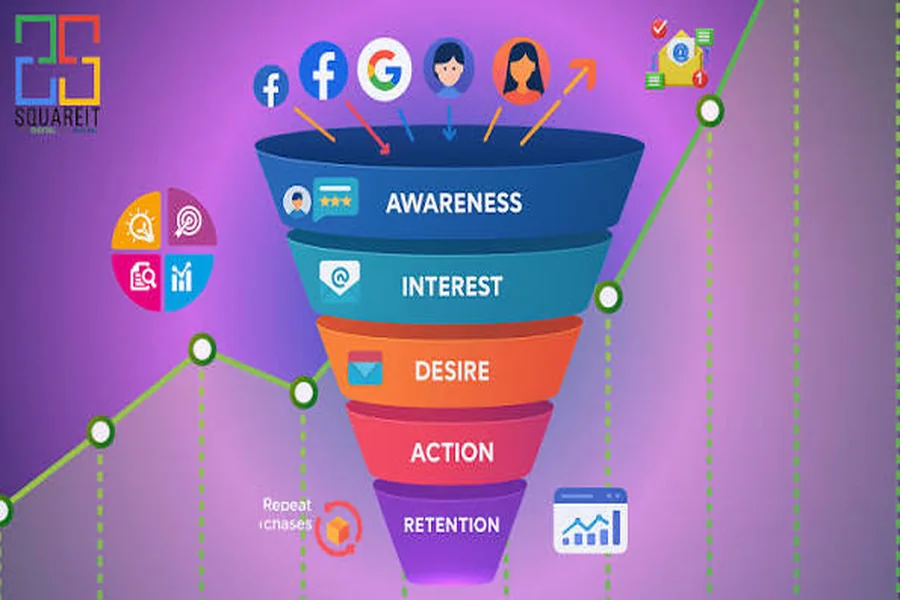
Performance Marketing Funnels play a crucial role in turning online traffic into measurable business results. In today’s competitive digital landscape, businesses are not just focused on getting clicks—they want conversions, sales, and long-term customer value. A well-structured funnel helps guide potential customers through each stage of the buying journey while ensuring every marketing dollar is used effectively.
At its core, a performance-driven funnel connects awareness, engagement, and conversion into a seamless system. Instead of random marketing efforts, everything is structured, tracked, and optimized for results. This approach allows marketers to identify what works, eliminate waste, and scale profitable campaigns with confidence.
Understanding Performance Marketing Funnels
A Performance Marketing Funnel is a structured path that guides users from initial awareness to final conversion using data-driven strategies. Unlike traditional marketing, where success is often measured broadly, performance marketing focuses on measurable outcomes such as clicks, leads, and sales.
The funnel typically starts with attracting attention through ads, content, or social media. From there, potential customers are nurtured with targeted messaging until they are ready to make a purchase or take a desired action. Every stage is tracked using analytics tools, allowing marketers to understand user behavior and improve performance continuously.
What makes these funnels powerful is their focus on accountability. Every step has a purpose, and every result can be measured. This makes it easier for businesses to scale campaigns while maintaining profitability.
Key Stages of a Performance Marketing Funnel
A successful funnel is usually divided into several key stages that represent the customer journey.
The first stage is awareness, where potential customers are introduced to a brand through ads, search engines, or social platforms. The goal here is visibility and reach.
The second stage is interest, where users begin engaging with content such as blog posts, videos, or landing pages. At this point, they are evaluating whether the brand offers value.
The third stage is consideration, where prospects compare options and look for solutions. This is where email marketing, retargeting ads, and testimonials become important.
The fourth stage is conversion, where the user takes action—such as making a purchase, signing up, or requesting a service.
The final stage is retention, where businesses focus on keeping customers engaged through follow-ups, loyalty programs, and personalized offers. A strong funnel does not end at conversion; it continues building long-term relationships.
Building an Effective Performance Marketing Strategy
Creating effective Performance Marketing Funnels requires a strategic approach that aligns with business goals. The first step is understanding the target audience. Knowing their needs, pain points, and behaviors helps in crafting personalized messaging that resonates.
Next is selecting the right channels. Depending on the audience, platforms like Google Ads, Facebook, Instagram, or LinkedIn may be used to attract traffic. Each channel plays a different role in the funnel, and integration is key.
Landing pages are another critical element. A high-converting landing page should be simple, focused, and designed to guide users toward a single action. Clear headlines, strong calls-to-action, and trust signals can significantly improve conversion rates.
Tracking and analytics also form the backbone of strategy building. Tools like conversion tracking, heatmaps, and customer journey analysis help marketers understand what is working and what needs improvement.
Finally, continuous testing is essential. A/B testing different ads, creatives, and landing pages ensures that performance is constantly improving over time.
Optimization Techniques and Key Metrics
Optimization is what transforms a basic funnel into a high-performing system. Without optimization, even the best funnel structure will fail to deliver consistent results.
One important technique is audience segmentation. By dividing users based on behavior, demographics, or interests, marketers can deliver more personalized messaging, which leads to higher conversion rates.
Retargeting is another powerful optimization strategy. Many users do not convert on their first visit, so retargeting helps bring them back with tailored ads and reminders.
Key performance metrics also play a vital role in optimization. Click-through rate (CTR) shows how effective ads are at attracting attention. Conversion rate measures how well traffic turns into customers. Cost per acquisition (CPA) helps determine profitability. Return on ad spend (ROAS) is one of the most important indicators of overall campaign success.
By continuously monitoring these metrics, marketers can make data-driven decisions that improve efficiency and profitability across the entire funnel.
Common Mistakes in Performance Marketing Funnels
Despite their effectiveness, many businesses make mistakes when building Performance Marketing Funnels. One common issue is targeting the wrong audience. If the audience is not properly defined, even the best campaigns will fail to deliver results.
Another mistake is ignoring the importance of landing page optimization. Sending traffic to poorly designed pages often leads to high bounce rates and lost opportunities.
Many marketers also focus too much on acquisition and neglect retention. However, retaining existing customers is often more cost-effective than acquiring new ones.
Lack of testing is another major issue. Without A/B testing, businesses miss opportunities to improve performance and scale successful strategies.
Lastly, not tracking data properly can lead to poor decision-making. Without accurate insights, it becomes difficult to identify what is working and what needs improvement.
Final Thought
Performance Marketing Funnels are essential for businesses that want to grow in a structured and measurable way. By understanding each stage of the funnel and continuously optimizing performance, marketers can achieve higher conversions and better return on investment. A well-built funnel not only drives sales but also creates long-term customer relationships that support sustainable growth.
FAQs
What is a Performance Marketing Funnel?
A Performance Marketing Funnel is a structured system that guides potential customers from awareness to conversion using measurable marketing strategies.
Why are Performance Marketing Funnels important?
They are important because they help businesses track results, optimize campaigns, and improve return on investment through data-driven decisions.
Which channels work best for Performance Marketing Funnels?
Channels like Google Ads, Facebook Ads, Instagram, email marketing, and SEO are commonly used depending on the target audience.
How can I improve my funnel conversion rate?
You can improve conversion rates by optimizing landing pages, using retargeting, testing different creatives, and targeting the right audience.
What metrics should I track in a funnel?
Key metrics include CTR, conversion rate, CPA, and ROAS, as they help measure performance and profitability.
Do Performance Marketing Funnels work for small businesses?
Yes, they are highly effective for small businesses because they allow controlled spending and measurable growth strategies.
